安装“碳道”
碳交易手机客户端
新闻产生价值 资讯挖掘商机
碳交易手机客户端
新闻产生价值 资讯挖掘商机
下载APP
 碳道
碳道
魏尚进:拜登的气候倡议要成功,还需要三项全球行动
碳道小编 · 2020-11-18 21:11 · 阅读量 · 1819
摘要:大多数气候科学家认为,如果我们继续以过去几十年来的速度向大气中排放温室气体,人类将自我毁灭。国际社会于2015年在巴黎达成了一项具有里程碑意义的协定,承诺几乎所有国家都将根据“已有发展轨迹”采取措施大幅减少温室气体排放。
哥伦比亚大学终身讲席教授
占世界人口大约4%的美国选民终于选出了下一任总统,虽然现任总统还没有认输。美国的气候政策不仅会影响今天地球上的每一个人,还会影响我们的子孙后代。乔·拜登(Joe Biden)的胜出将对地球有利,但这样还远远不够。
大多数气候科学家认为,如果我们继续以过去几十年来的速度向大气中排放温室气体,人类将自我毁灭。国际社会于2015年在巴黎达成了一项具有里程碑意义的协定,承诺几乎所有国家都将根据“已有发展轨迹”采取措施大幅减少温室气体排放。当时,美国在推动其他国家(包括中国)加入协议的过程中发挥了引领的作用。中国承诺其二氧化碳的排放与GDP之比在2030年前后达到峰值。如果没有发展中大国的承诺,《巴黎协定》的重要性就会大打折扣。
各国科学家知道,《巴黎协定》本身并不足以让人类高枕无忧,因为它只是延迟了地球气候达到危险临界点的时间,而不能避免其发生。当时的希望是,各国政府在达成该协定之后继续努力达成一系列目标更严的未来协议。
但2016年当选的美国总统唐纳德·特朗普(Donald Trump)公开反对美国加入《巴黎协定》,并启动了退出协定的进程(于2020年11月4日美国大选翌日生效)。特朗普的决定在两方面使全球气候的努力受挫。首先,这一决定默许其他想要淡化减排目标的国家,在没有太大阻力的情况下得偿所愿;其次,这一决定还停止了任何旨在提升巴黎峰会承诺的多边谈判,因为没有美国的参与和推动,这些努力既没有意义,也不可能实现。
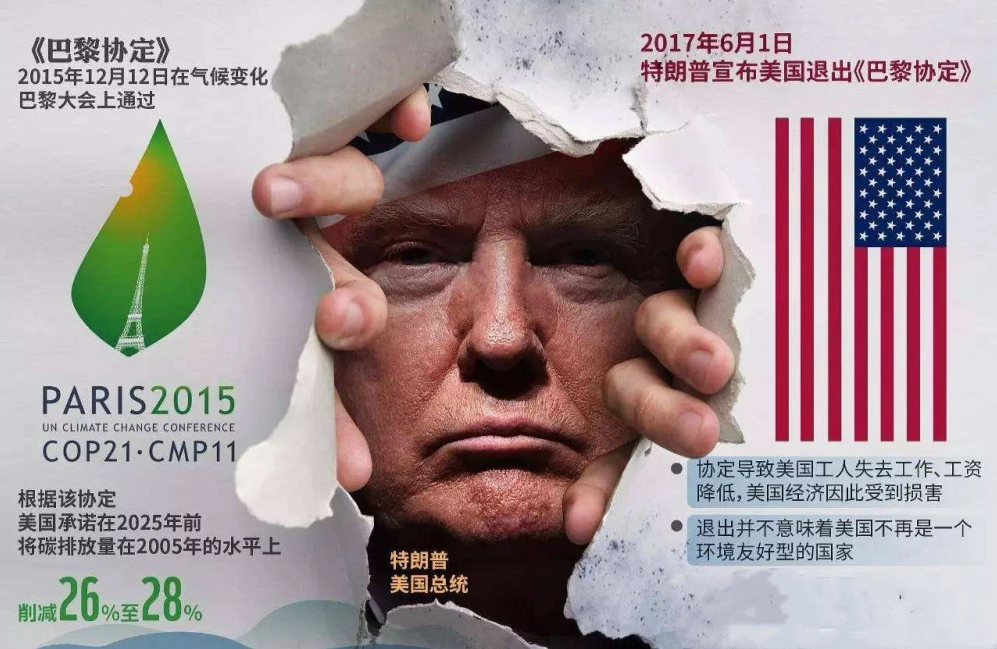
特朗普反对《巴黎协定》,不一定是因为他或他的支持者们不理解其必要性,而是出于一些狭隘的考虑。在接下来的几十年中,热带或热带附近的国家因为没有足够的资金采取充分的应对措施,将首当其冲地遭受气候灾难的危害。例如,到本世纪末,马尔代夫约70%的国土可能被海水淹没。但对许多美国选民来说,这样的受害者太抽象或太陌生。
由于减少温室气体排放涉及到的对可再生能源进行投资需要资金,也会降低对美国储量丰富的页岩气和煤炭的依赖与需求,因此一个只关注眼前利益的美国选民可能觉得美国加入《巴黎协定》不划算。此外,减少温室气体排放主要造福的是子孙后代,但成本从现在就要开始支付了。
最后,尽管由气候变化引起的海平面上升可能给纽约、旧金山、迈阿密、上海、中国香港和东京等城市带来严重损失,但这些城市足够富有,可以找到适应和应对之策,部分国家的非海岸地区实际上还可能从中受益。因此,较富裕的国家可能没有同样的紧迫感来应对许多贫穷国家的气候威胁。
相比之下,拜登则承诺一旦当选总统,将使美国重返《巴黎协定》。但是,仅凭一位美国领导人将气候变化视为国家安全的威胁,不足以扭转全球气候变化。中国最近富有雄心地宣布将超越其巴黎承诺,于2060年实现碳中和,这是令人鼓舞的一步。但我们还需要所有国家共同采取更多的行动。
鉴于达成2015年《巴黎协定》的谈判已经困难重重,怎样才能鼓励各国加大减排努力?我提议三项新工具可能对此有所帮助。
首先,虽然特朗普的关税既不公平又低效(而且根据世贸组织最近的一项裁决,他对中国商品课征的关税违背了国际规则),但气候变化意识强的政府对温室气体排放量高(人均或每单位GDP)的国家,对进口商品征收关税可能是(提高排放成本的)一种有效手段。这样的征税将缩小温室气体排放的实际全球成本与排放国(要小得多的)直接成本之间的差距。
其次,包括国际货币基金组织、世界银行、欧洲复兴开发银行、欧洲投资银行、亚洲开发银行和亚洲基础设施投资银行在内的国际金融机构,应该考虑将力度更大的温室气体减排目标作为向成员国提供贷款和援助的条件。这些贷款机构还可以组织更多的技术援助,以帮助成员国设计和实施低成本、高效益的温室气体减排方法,包括可交易的排放许可制度。此外,向最不发达国家提供特别赠款,可用以抵消其转用更多可再生能源的部分成本。
第三,在转向可再生能源的同时,需要更多创新来降低碳捕获(与封存)的成本。这将允许一些基于化石燃料的发电继续存在,同时又能消除由此产生的温室气体排放。由于许多国家不希望完全放弃化石燃料,因此在全球范围需要加大二氧化碳的捕获与封存。综合气化联合循环技术(IGCC)加上碳捕获封存(CCS)是一种有前途但目前成本还较昂贵的方案。因此,更多能够降低成本的创新对世界具有重要的、积极的溢出效应。这意味着全球需要更慷慨地奖励技术进步。至少,我们需要鼓励绿色产业政策,为有助于减少温室气体排放的创新提供补贴。
气候变化危机是对人类长期生存的最大威胁。本文提议推出三项新的工具,包括碳排放关税、在对发展中国家提供资助时加上减排条件、以及更多鼓励创新以降低碳捕获与封存的成本,以此为世界的生存创造更多机会。
Three Global Steps to a Biden Climate Initiative
SHANG-JIN WEI
Editor-in-chief of Fudan Financial Review
Professor of Finance and Ecnomics of Columbia University
Former Chief Economist of Asian Development Bank
American voters, who represent about 4% of the world’s population, have elected a new president, even though the current one has not admitted defeat. US climate policies will affect not only everyone on Earth today, but also future generations. A Joe Biden’s victory is good for the planet – but that alone is far from being enough.
Most climate scientists believe that humanity will self-destruct if we continue adding greenhouse gases (GHGs) to the atmosphere at the rate we have been doing over the last few decades. In 2015, the international community reached a landmark accord in Paris that committed almost all countries to major reductions in GHG emissions compared to a business-as-usual scenario. The United States played a leadership role in getting other countries on board – especially China, which pledged to reach peak carbon dioxide emissions around 2030. Without the commitments from large developing countries, the Paris agreement would not be as significant.
Scientists knew that the Paris agreement was by itself insufficient to bring humanity into a comfort zone, because it only delayed rather than averted the time when the world’s climate would reach a dangerous tipping point. The hope then was that governments would build on the accord in a series of future, progressively more ambitious, agreements.
But US President Donald Trump, elected in 2016, openly opposed America’s participation in the Paris agreement and started the process of withdrawing from it. (The withdrawal is due to take effect on November 4, one day after the election.) Trump’s decision set back the global climate effort in two ways. First, it tacitly allowed other countries that wanted to water down their climate actions to do so without much resistance. Second, it stopped any serious multilateral negotiations to upgrade the commitments made in Paris, because such efforts are neither meaningful nor possible without US participation and leadership.
Trump opposes the Paris agreement not because he or his supporters do not understand the need for it, but for narrow reasons. Over the next few decades, the brunt of the climate disaster will be felt by countries in or near the tropics that are not rich enough to undertake sufficient adaptation measures. 70% of the country of the Maldives, for example, could be under water before the end of the century. But such victims are too abstract or foreign for many US voters.
Because reducing GHG emissions involves costly investments in renewable energy and reduced dependence on shale gas and coal, which America possesses in abundance, a narrow calculation might make US participation in the Paris agreement seem less appealing to some voters. In addition, while reducing GHG emissions will mainly benefit future generations, the costs of doing so start now.
Finally, although a sea-level rise caused by climate change can create havoc for New York, San Francisco, Miami, Shanghai, Hong Kong, and Tokyo, these cities are rich enough to find ways to adapt and cope. And some other regions could actually benefit. So, richer countries may not feel the same urgency to tackle the climate threat that many poorer ones do.
Biden, by contrast, has pledged to return the US to the Paris agreement if he becomes president. But a US leader who regards climate change as a national-security threat still will be insufficient for global mitigation. China’s recent ambitious declaration that it will go beyond its Paris commitment and achieve carbon neutrality by 2060 is an encouraging step. But we need all countries to do more collectively.
Given the difficulty of the negotiations that produced the Paris accord, how do we encourage countries to step up their mitigation efforts? Three new tools could help.
First, whereas Trump’s tariffs were both inequitable and inefficient (and his tariffs on Chinese goods are illegal according to a recent WTO ruling), it may be productive for climate-conscious governments to impose tariffs on imports from countries with high GHG emissions on either a per capita or per-unit-of-GDP basis. Such levies would narrow the gap between the true global cost of GHG emissions and the immediate (and much smaller) cost currently incurred by emitters.
Second, international financial institutions – including the International Monetary Fund, World Bank, European Bank for Reconstruction and Development, European Investment Bank, Asian Development Bank, and Asian Infrastructure Investment Bank – should consider conditioning loans and assistance to member countries on ambitious GHG emission reductions. These lenders can also organize more technical assistance to help member states devise and implement cost-effective ways to reduce GHG emissions, including a tradable emission-permit system. In addition, special grants to least-developed countries could offset part of the cost of switching to more renewable energy sources.
Third, parallel to a shift to renewable energy, more innovation is needed to reduce the cost of carbon capture and sequestration. This will allow for some fossil-fuel-based electricity generation while eliminating the resulting GHG emissions. Because many countries do not want to give up fossil fuels completely, CO2 capture needs to be scaled up. Integrated gasification combined cycle technology (IGCC) plus carbon capture and sequestration (CCS) is a promising but currently expensive option. Innovations that reduce costs have an important positive spillover for the world, implying a need to reward technical progress more generously. At a minimum, we need to encourage green industrial policies that subsidize innovations that will help all countries to reduce GHG emissions.
The climate-change crisis is the greatest threat to humanity’s long-term viability. With a climate tariff, climate friendly conditionality in international assistance, and more incentives for innovations that will reduce the cost of carbon capture and sequestration, the world will have a fighting chance of survival.
本文选自《复旦金融评论》■作者:魏尚进 复旦大学泛海国际金融学院学术访问教授、哥伦比亚大学终身讲席教授
 相关文章
相关文章